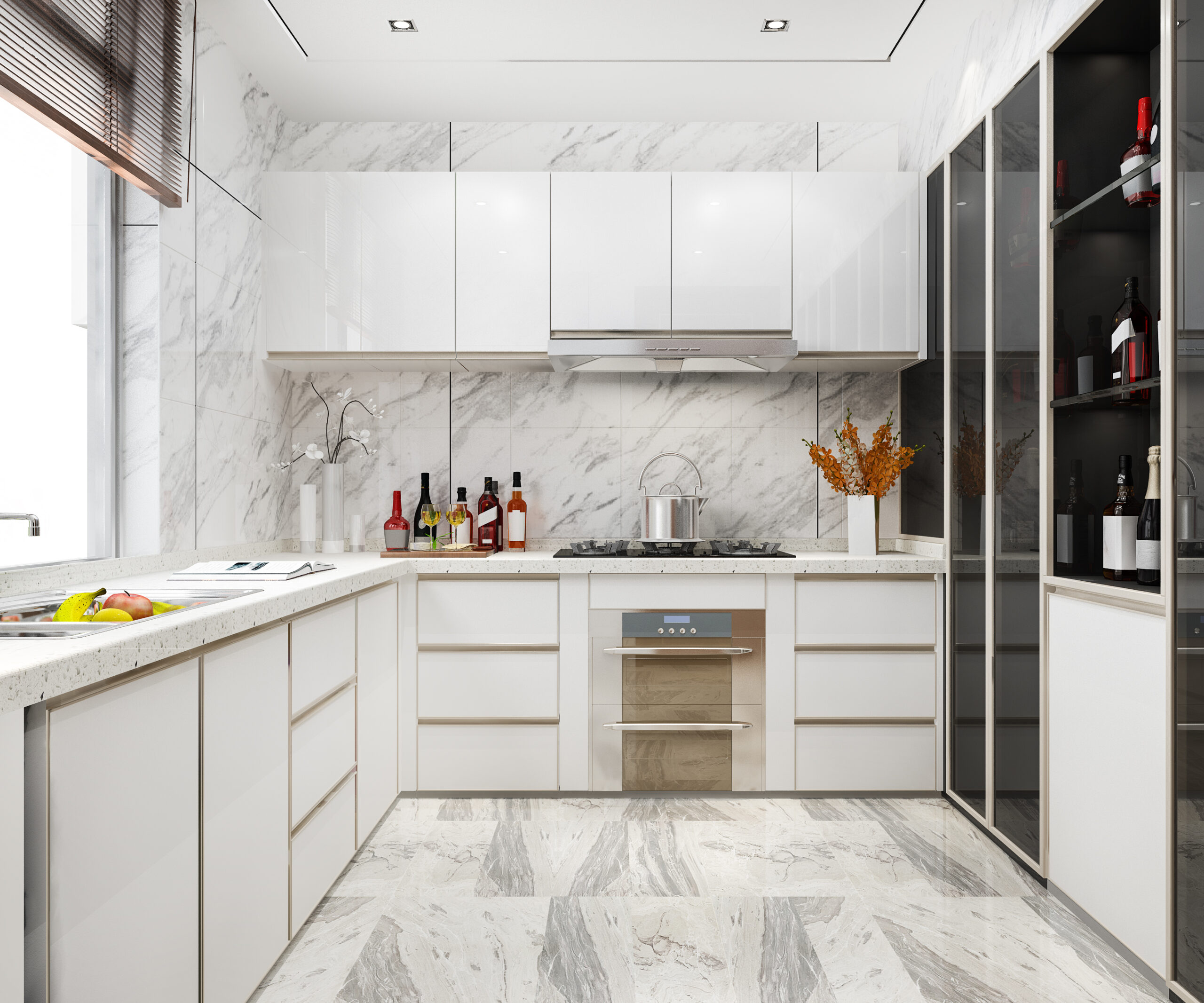
Kitchen cabinets do more than provide storage. They organise your cookware, keep everyday essentials within reach, and play a major role in defining the overall look of your kitchen. Choosing the right cabinets is just as important as selecting premium fittings such as Kitchen taps, as both contribute to a kitchen that combines functionality, quality, and style.
This guide walks through the choices that actually affect how long your cabinets last and how well they work day to day: the board material, the finish, the hardware, and the layout. Here is why each one matters and how to get it right the first time.
Start With the Cabinet Material
The board inside a cabinet door matters more than the color on top of it. A good finish on a weak board still swells, sags, or comes apart within a few years. Take a moment to understand the main options before you look at colors.
Plywood
Plywood is built from thin layers of wood veneer glued together with the grain running in alternating directions. That cross-layered structure gives it strength and keeps it from warping the way solid boards sometimes do. It handles moisture better than most other engineered boards, which makes it a strong pick for base cabinets near the sink and for kitchens in humid coastal towns.
Also Read:- How to Choose the Right Simpolo Tiles for Every Room in Your Home
MDF and Moisture-Resistant MDF
Medium-density fiberboard (MDF) is made from fine wood fibers pressed together with resin under heat, which gives it a smooth, even surface. That smoothness makes MDF a favorite for painted doors and detailed panel designs. Standard MDF swells if water sits on it for long, so look for a moisture-resistant (MR) grade near sinks and dishwashers.
Particle Board and Chipboard
Particle board, also called chipboard, is pressed from wood chips and sawdust bound with resin. It costs less than plywood or MDF, which makes it a reasonable choice for cabinets that see light use, such as pantry shelving or upper cabinets far from water. It carries less weight-bearing strength than plywood, so heavy countertop appliances need sturdier support underneath.
Marine Board
Marine board goes through extra treatment to resist water, making it suited to kitchens that deal with steam, splashes, or high humidity for most of the year. It costs more than standard boards, but it holds up in conditions that would soften a regular particle board within a season.
Megha Marketing stocks chipboard particle boards, MDF boards, MCF boards, plywood, and marine boards, so a buyer can compare samples side by side before settling on one for a specific cabinet run.
Check the Finish and Door Style
Once the board is settled, the finish decides how the kitchen looks and how easy it stays to clean.
- Laminate resists scratches and wipes clean fast, which suits a busy family kitchen.
- Melamine comes in a wide range of colors and costs less than laminate, though it can chip at the edges over time.
- Painted MDF gives a smooth, matte or gloss look and takes color changes well if you repaint down the line.
- Veneer shows real wood grain at a lower cost than solid wood doors.
Pick a finish that matches how the kitchen gets used. A household that cooks daily with a lot of oil and steam needs a wipeable surface more than a household that cooks occasionally.
Also Read:- 7 Best Floor Tiles for Kenyan Homes in 2026
Pick Hardware That Will Last
Hinges, handles, and drawer runners take more daily wear than the cabinet box itself. A soft-close hinge cuts down on slamming and protects the cabinet frame over time. Solid metal handles hold up better than plated plastic ones, especially in a kitchen with wet or oily hands opening drawers all day.
Check that hinges carry a weight rating suited to the door size, since an oversized door on an undersized hinge will sag within a year. Megha Marketing‘s ironmongery range covers handles, hinges, and locks, which gives cabinet buyers a place to match hardware to the boards and finish in the same trip.
Plan the Layout Before You Order
The best material choice will not fix a poor layout. Before ordering cabinets, walk through how the kitchen gets used:
- Map the work zones. Keep the stove, sink, and fridge within easy reach of one another so cooking does not turn into a long walk back and forth.
- Leave clearance for doors and drawers. Cabinet doors need room to swing fully open without hitting an island, wall, or appliance.
- Plan storage by weight. Store heavy pots low, near the stove, and keep lighter items in upper cabinets.
- Measure twice. A cabinet order built on rough measurements often leaves gaps or forces last-minute cuts on-site.
Match Cabinets to Your Kitchen’s Moisture and Climate
Kenyan homes span very different conditions, from the dry highland air around Nairobi to the humid, salty air near Mombasa. A coastal kitchen benefits from marine board or moisture-resistant MDF near wet zones, since standard particle board softens faster in that kind of air. A highland kitchen with lower humidity has more flexibility and can lean on standard MDF or particle board for non-wet areas without the same risk.
Set a Budget That Covers the Whole Kitchen
Cabinet cost breaks down into three parts: the board material, the finish, and the hardware. Spending everything on a premium finish while cutting corners on hinges often backfires, since worn-out hardware is what makes a kitchen look tired first. A balanced budget puts a bit more toward a moisture-resistant board and solid hinges, then adjusts the finish to fit what is left.
Choosing the right cabinets comes down to matching the board, finish, and hardware to how the kitchen actually gets used, not just to what looks good in a showroom photo. Get the material right for your climate, pick hardware built to handle daily use, and plan the layout before anything gets ordered. Do that, and the cabinets will still open and close smoothly a decade from now.
Megha Marketing Branches
Mombasa (Head office): Dar-es-Salaam Road, Opposite Freight Forwarders Limited, Mombasa, Kenya
Mombasa (Nyali): Greenwood Village Mall – 1st Floor, Along Greenwood Drive.
Nairobi: Wing A, Karen-Langata Rd Opp Hillcrest Lane Binaa Complex, First Floor, Kenya
Frequently Asked Questions
What is the best material for kitchen cabinets in Kenya?
Plywood and marine boards handle humidity well, which suits coastal kitchens. Moisture-resistant MDF or standard MDF works for painted doors in drier, highland areas. Match the board to how much moisture the kitchen deals with daily.
Is MDF or plywood better for kitchen cabinets?
Plywood generally resists moisture and holds screws better, making it stronger for cabinet boxes. MDF gives a smoother finish for painted doors but swells faster if water reaches raw edges, so it suits drier spots.
How long do kitchen cabinets typically last?
Plywood cabinets often last twenty to thirty years with normal care. Particle board cabinets usually last five to ten years. Solid hardware and a moisture-appropriate board stretch that lifespan further.
Should I choose soft-close hinges for kitchen cabinets?
Yes, if the budget allows it. Soft-close hinges reduce slamming, which protects both the door and the cabinet frame from wear, and they hold up well under daily use in a busy kitchen.
Where can I buy kitchen cabinet materials and hardware in Kenya?
Megha Marketing supplies board materials such as plywood, MDF, chipboard, and marine board, along with hinges, handles, and locks, at its Mombasa and Nairobi branches, so buyers can compare options in one location. Just bring your list & get customised quotes.

Jeegar Shah is a building materials and interior solutions professional at Megha Marketing EA Ltd. He shares practical insights on tiles, bathware, kitchen solutions, construction materials, and modern interior finishes to help homeowners and industry professionals make better product choices.